
Nailsea, a small metropolis in North Somerset, may also seem quiet and unassuming nowadays, however its call as soon as travelled some distance past England. In the past due 18th and early nineteenth centuries, Nailsea have become the world over regarded for one fantastic motive—its glassworks. The glass produced here was shipped throughout Britain and exported worldwide, making Nailsea a key player within the Industrial Revolution.
This article explores the history of Nailsea Glassworks, how it formed the city, and why Nailsea’s name remains famous amongst creditors and historians around the arena.
Origins and Establishment (1788–Early 19th Century)
Nailsea Glassworks turned into installed in 1788 by way of entrepreneur John Robert Lucas, who noticed the economic ability of Nailsea’s abundant coal assets from the nearby Elms colliery—a key fuel for glass production. Coal accessibility, along with assets of lime and sand, made the website perfect for glass manufacture. Originally trading as the Nailsea Crown Glass and Glass Bottle Manufacturers, the works were designed to produce both window glass and bottle glass, essential materials during the early stages of Britain’s Industrial Revolution.
Lucas brought experience from previous ventures in Bristol and at Stanton Wick, and quickly expanded operations: two initial glass cones were constructed, one for window glass and another for bottle glass production. Over time, the works developed new facilities—such as an additional cone in the 1820s and the “Lily cone” in the 1840s for sheet glass—solidifying its place as a dynamic industrial producer.
Growth and Industrial Importance
By 1835, Nailsea had become the fourth-largest glassworks in Britain, employing over a hundred workers and covering a sizable area between prominent local landmarks. It produced a lot of glass products—in general low-grade bottle and crown glass—distributed considerably at some stage in the UK and even exported to places as a ways away because the West Indies and the US.
The success of the glassworks no longer only drove the nearby economy but also stimulated the improvement of the metropolis itself. Prior to its establishment, Nailsea was predominantly agricultural, yet the glassworks spurred populace growth, contributed to agreement growth, and even affected the format and social infrastructure of the network, consisting of the hole of public houses and spiritual institutions utilized by workers.
Craftsmanship and Decorative Glass
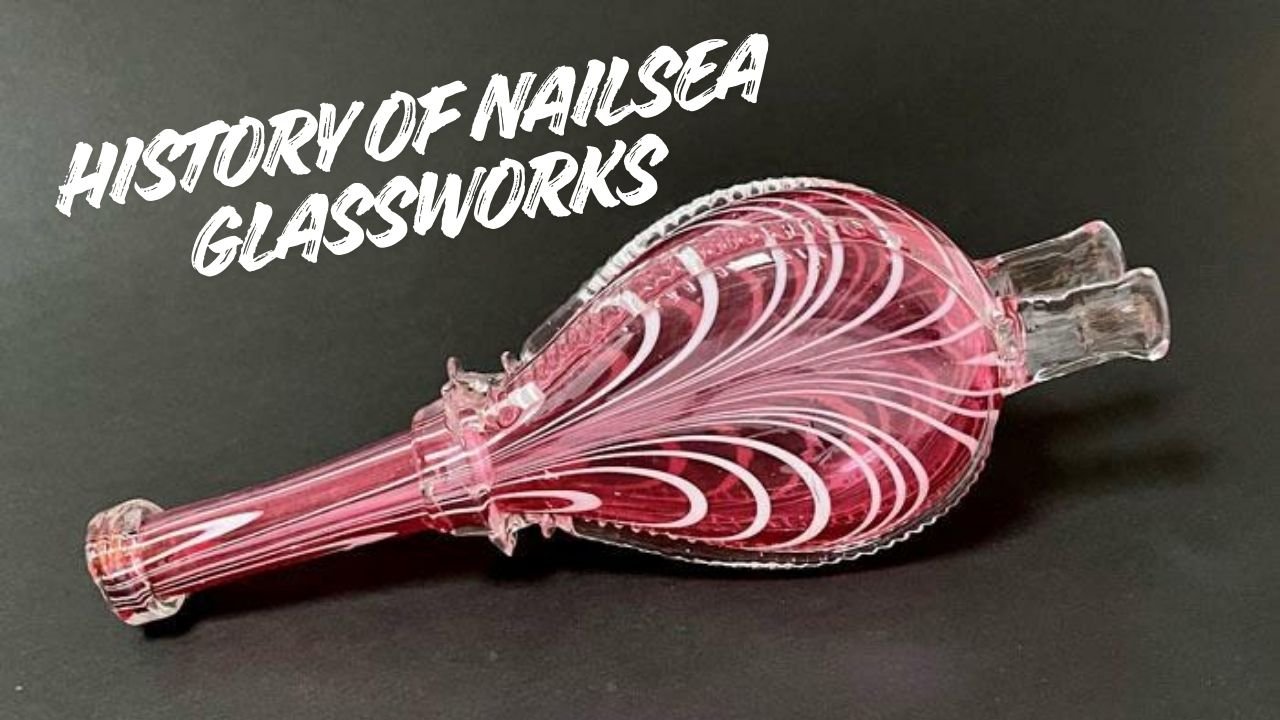
While Nailsea’s most important manufacturing lines centered on practical crown and bottle glass, it gradually became related to ornamental glassware, specially pieces made by using person glassblowers after respectable shifts. These casual creations, regularly regarded as quit-of-shift works, included jugs, flasks, mugs, pipes, rolling pins, and different novelty objects, regularly embellished with unique white trails or coloured streaks.
This informal however creative output contributed greatly to Nailsea’s international renown. The term Nailsea glass has come to explain this style of decorative glasswork—characterised by using its expressive patterns and craftsmanship—despite the fact that plenty of it was not part of the manufacturing facility’s formal manufacturing strains. Collectors round the arena now are looking for those pieces for his or her historic charm and creative area of expertise.
Challenges and Decline
Despite its early successes, Nailsea Glassworks faced mounting difficulties inside the latter half of the 19th century. Local coal supplies have become much less dependable, and competition from large, more modernized manufacturers made it harder to maintain tempo. After several changes in ownership, along with acquisition by using Chance Brothers in 1870, operations step by step declined and subsequently ceased in 1873.
Though production stopped, the commercial remnants remained enormous. While much of the authentic website online has due to the fact been constructed over—in part by a present day grocery store—key elements have been preserved and are diagnosed for their archaeological and historic fee. The website online become formally specific a scheduled monument, and efforts had been made to defend and interpret what stays.
Global Legacy and Cultural Impact
What makes Nailsea mainly noteworthy isn’t always just its contribution to industrial-scale glass manufacture, but its lasting cultural and inventive affect. The ornamental patterns associated with Nailsea glass have come to be emblematic of early 19th-century British vernacular craftsmanship. Today, portions attributed to Nailsea bureaucracy are prized in auctions and personal collections across continents.
Ultimately, Nailsea’s story captures the transformation of a rural network into an business hub and marks a bankruptcy in Britain’s broader narrative of innovation and artisanal talent.
Conclusion
The records of Nailsea Glassworks is a charming mixture of business ambition, community transformation, and creative legacy. From its founding in 1788 to its upward push as one among Britain’s prominent glass manufacturing facilities, Nailsea exemplified the power of nearby assets and entrepreneurial vision. More than only a manufacturer of useful glass, its craftsmen created items of beauty that transcended regular use, leaving an indelible mark on the sector of ornamental glass. Though the glassworks closed in the overdue nineteenth century, the call Nailsea endures—celebrated globally by means of collectors and historians alike as a image of creativity, craftsmanship, and the rich history of British glassmaking.
FAQ’s
What is Nailsea Glassworks?
Nailsea Glassworks was a first-rate glass manufacturing manufacturing facility operating from 1788 to 1873 in Nailsea, Somerset.
Why is Nailsea glass famous?
Nailsea glass is understood for its handmade first-class, thick forms, air bubbles, and unique shades—specifically Nailsea Blue.
Can you still purchase Nailsea glass?
Yes, unique pieces may be found at antique shops, auctions, and personal collections, though they are increasingly rare.
